



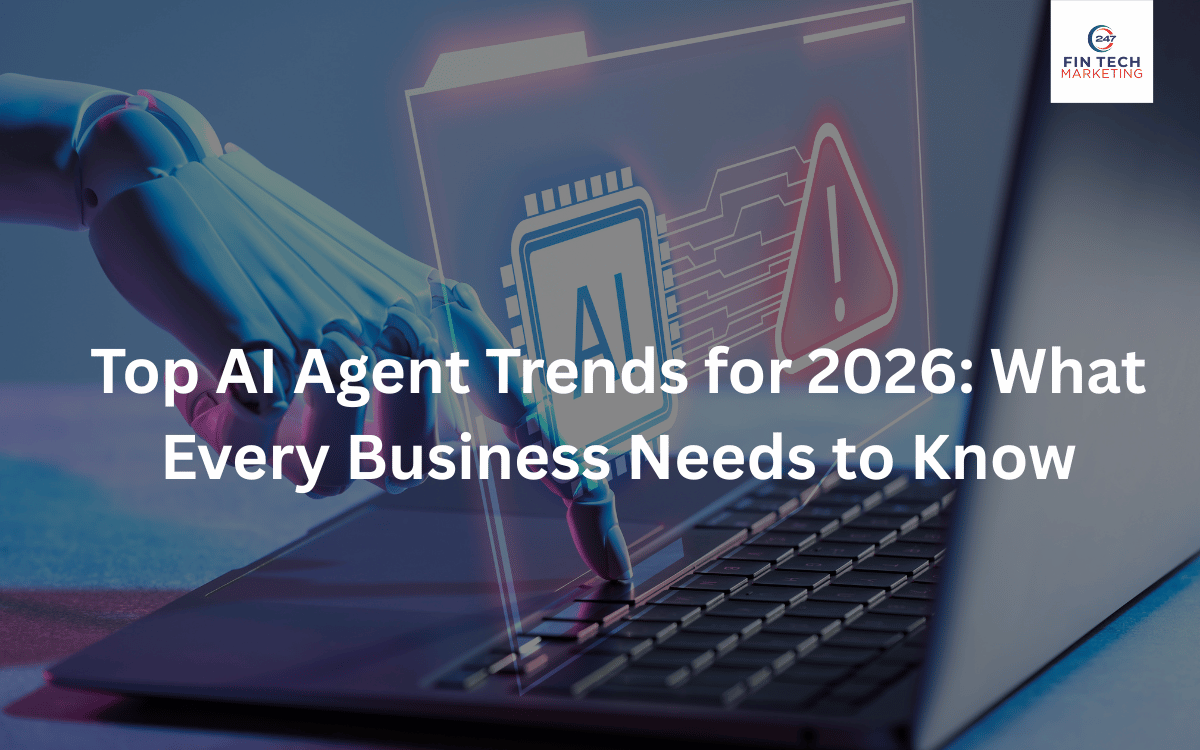
Artificial Intelligence is entering a new phase one where it no longer just supports human work but actively participates in it. In 2026, AI agents are emerging as one of the most transformative technologies, redefining how businesses operate, compete, and grow.
Unlike traditional AI tools that rely on prompt and isolated tasks, AI agents can understand goals, make decisions, and execute complex workflows autonomously. They don’t just generate insights they act on them. This shift marks a fundamental evolution from passive intelligence to active, outcome-driven systems.
Across industries, organizations are rapidly moving beyond experimentation and into real deployment. AI agents are being embedded into core business functions from customer service and operations to strategy and innovation. As a result, companies are unlocking new levels of efficiency, scalability, and responsiveness that were previously difficult to achieve.
This blog explores the key trends shaping AI agents in 2026, how they are being applied in real-world scenarios by a Fintech Marketing Agency, and why they are becoming a critical component of the modern enterprise technology stack.
What is an AI Agent?
An AI agent is a software system designed to act autonomously on behalf of a user or organization. Unlike traditional AI tools that simply respond to prompts, AI agents can interpret goals, break them into actionable steps, use external tools, and execute tasks across multiple systems.
In essence, AI agents shift AI from “thinking” to “doing.”
For example, instead of just generating a report, an AI agent can:
- Gather relevant data from multiple sources
- Analyze trends
- Create visual summaries
- Deliver insights and even recommend actions
Modern AI agents are often part of larger ecosystems where multiple agents collaborate. These systems can:
- Maintain memory and context
- Learn from previous interactions
- Continuously improving performance over time
This evolution is what makes AI agents fundamentally different from earlier AI solutions. They are not just tools they are becoming digital coworkers embedded in business processes.
Types of AI Agents in Practice
AI agents come in various forms depending on their purpose and complexity:
1. Copilot or Augmentation Agents
These assist individuals in tasks such as writing, coding, research, or communication. They enhance human productivity rather than replacing it.
2. Workflow Automation Agents
These agents orchestrate multi-step processes across tools automating operations like onboarding, reporting, or customer service workflows.
3. Domain-Specific Agents
Built for specialized industries such as healthcare, finance, or legal services, these agents bring deep domain expertise.
4. AI-Native Operating Models
In this model, organizations redesign workflows entirely around AI agents, embedding them into every layer of operations.
5. Virtual AI Workers
These function like digital employees, handling tasks autonomously while collaborating with human teams. Together, these categories highlight a clear shift: AI is no longer just assisting humans, it is actively participating in work.
Key AI Agent Trends to Watch in 2026
1. Rise of Industry-Specific AI Agents
One of the most significant trends is the shift from general-purpose AI to industry-specific agents.
In 2026, AI agents are being designed with deep expertise in specific domains such as:
- Healthcare diagnostics
- Financial analysis
- Legal research
- Marketing optimization
These specialized agents can handle complex, high-stakes tasks with greater accuracy and contextual understanding.
For example, in marketing, AI agents can:
- Create personalized campaigns
- Optimize messaging in real time
- Analyze customer behavior across channels
Rather than replacing professionals, these agents augment human capabilities, allowing experts to focus on strategic and creative work.
2. Large-Scale AI Agent Deployment
AI agent adoption is accelerating rapidly across industries.
Organizations are moving from pilot projects to enterprise-wide deployments. By the next few years, a significant portion of businesses will rely on AI agents for core operations, including:
- Software development
- Data analysis
- Customer communication
This shift reflects a broader transformation: AI agents are becoming a standard component of enterprise infrastructure, not just experimental technology.
3. Proactive, Problem-Solving Agents
Traditional AI systems react to user input. In contrast, modern AI agents are becoming proactive.
These agents continuously monitor data streams and identify:
- Risks
- Opportunities
- Inefficiencies
For example:
- In supply chains, they can predict disruptions and suggest alternatives
- In project management, they can identify bottlenecks before they occur
- In finance, they can simulate scenarios and recommend strategies
This proactive capability enables organizations to shift from reactive decision-making to predictive and preventive strategies.
4. Emotionally Intelligent AI Agents
AI agents are becoming more emotionally aware, capable of understanding tone, sentiment, and context.
This is particularly impactful in:
- Customer service
- Education
- Mental health support
For instance, an AI customer support agent can:
- Detect frustration in a user’s tone
- Adjust its responses accordingly
- Escalate issues when necessary
This emotional intelligence leads to more natural and human-like interactions, improving customer satisfaction and trust.
5. Multi-Agent Systems and Collaboration
Instead of relying on a single AI system, organizations are adopting multi-agent architectures.
In these systems:
- Different agents handle specialized tasks
- Agents collaborate to solve complex problems
- Workflows are distributed across multiple intelligent components
For example:
- One agent gathers data
- Another analyzes it
- A third generates reports
- A fourth communicates results
This collaborative approach enables businesses to tackle challenges that are too complex for a single system or human team.
6. Low-Code and No-Code Agent Development
Building AI agents is becoming increasingly accessible.
Thanks to low-code and no-code platforms:
- Non-technical users can create AI agents
- Businesses can rapidly deploy solutions
- Development cycles are significantly reduced
This democratization of AI means that organizations no longer need large engineering teams to implement advanced AI solutions.
As a result, AI adoption is expanding beyond large enterprises to include startups and small businesses.
7. Predictive AI Agents
Predictive capabilities are becoming a core feature of AI agents.
By analyzing historical data and behavioral patterns, these agents can:
- Forecast outcomes
- Recommend preventive actions
- Optimize decision-making
For example:
- Predicting customer churn
- Forecasting inventory needs
- Suggesting optimal travel schedules
This shift transforms AI agents into strategic advisors, not just task executors.
8. Autonomous Decision-Making
AI agents are increasingly capable of making decisions independently.
While humans still provide oversight, agents can:
- Evaluate multiple variables
- Analyze large datasets
- Execute decisions in real time
In business contexts, this might include:
- Adjusting pricing strategies
- Managing portfolios
- Optimizing operations
This capability frees human workers to focus on higher-level thinking, creativity, and strategy.
Why Businesses Need AI Agents in 2026
1. Addressing Labor Shortages
Many industries are facing workforce shortages and increasing workloads.
AI agents help bridge this gap by:
- Automating repetitive tasks
- Handling large volumes of work
- Supporting human teams
This allows businesses to maintain productivity without overburdening employees.
2. Accelerating Digital Transformation
AI agents are key drivers of digital transformation.
They enable organizations to:
- Automate end-to-end workflows
- Integrate systems and processes
- Improve operational efficiency
As businesses continue to digitize, AI agents will play a central role in enabling this transformation.
3. Enhancing Customer Experience
Customer expectations are higher than ever.
AI agents help businesses deliver:
- Faster responses
- Personalized interactions
- Consistent service across channels
By leveraging AI, companies can provide high-quality, scalable customer experiences.
4. Advancements in Generative AI
Recent breakthroughs in generative AI have significantly enhanced the capabilities of AI agents.
These advancements enable:
- Better natural language understanding
- Improved reasoning and planning
- More accurate outputs
As a result, AI agents are becoming more reliable and effective in real-world applications.
5. Gaining Competitive Advantage
Organizations that adopt AI agents early gain a significant competitive edge.
They can:
- Operate more efficiently
- Making faster decisions
- Innovate more rapidly
In contrast, businesses that delay adoption risk falling behind.
Challenges and Considerations
Despite their potential, AI agents also introduce challenges:
1. Governance and Control
Ensuring that AI agents operate within defined boundaries is critical.
2. Security Risks
Agent-based systems introduce new vulnerabilities, such as data leaks and unauthorized actions.
3. Trust and Reliability
Businesses must ensure that AI agents produce accurate and consistent results.
4. Skill Gaps
Organizations need employees who can work effectively with AI systems.
Addressing these challenges is essential for successful adoption.
The Future of Work with AI Agents
AI agents are fundamentally reshaping how work is done.
Instead of performing tasks manually, employees will increasingly:
- Define goals
- Oversee AI systems
- Make strategic decisions
This shift creates a new role for humans: AI orchestrators.
In this model:
- AI handles execution
- Humans provide direction and judgment
The result is a more efficient and scalable workforce.
Conclusion
AI agents are no longer a forward-looking concept they are quickly becoming a present-day competitive necessity. As businesses, including those working with a Fintech Web Design Agency, navigate an increasingly complex and fast-paced environment, the ability to automate decisions, streamline workflows, and respond intelligently in real time is no longer optional.
What sets AI agents apart is not just their intelligence, but their ability to act. From proactive problem-solving to autonomous execution, these systems are redefining productivity and reshaping the boundaries between human and machine work.
However, the real value of AI agents lies in how organizations choose to adopt them. Success will depend on building the right strategy, ensuring proper governance, and creating a workforce that can effectively collaborate with intelligent systems. Businesses that approach this shift thoughtfully will not only improve efficiency but also unlock new opportunities for innovation and growth.
Looking ahead, AI agents will play a central role in shaping the Future of Fintech and the broader future of work. They will act as collaborators, decision-support systems, and digital operators freeing humans to focus on creativity, strategy, and high-impact thinking.
The question is no longer whether businesses should adopt AI agents but how quickly and effectively can they integrate them into their operations to stay ahead in an AI-driven world.

Author
Mitesh Patel
Mitesh Patel is the co-founder of 247 FinTech Marketing, LawFirm Marketing and a columnist. He helps companies like Emerson and other top Fortune 500 compnies to grow their revenue.