


Every fintech marketer knows how challenging customer acquisition can be. A financial technology company launches a new app, invests heavily in digital advertising, and offers attractive sign-up incentives such as cash rewards or zero-fee introductory periods. Initially, the results look promising. Downloads increase, registrations grow, and acquisition targets are achieved.
But what happens after the first 30 days?
Many users stop opening the app once they have claimed their rewards. Others leave their accounts inactive or move to competing platforms offering better incentives. The initial growth eventually slows down, revealing a much bigger challenge: customer retention.
Acquiring users is only the beginning. Building long-term engagement requires financial platforms to understand what motivates people to return, interact, and develop lasting habits. Working with a specialized Fintech Marketing Agency can help businesses move beyond short-term acquisition campaigns and develop customer engagement strategies rooted in behavioral psychology.
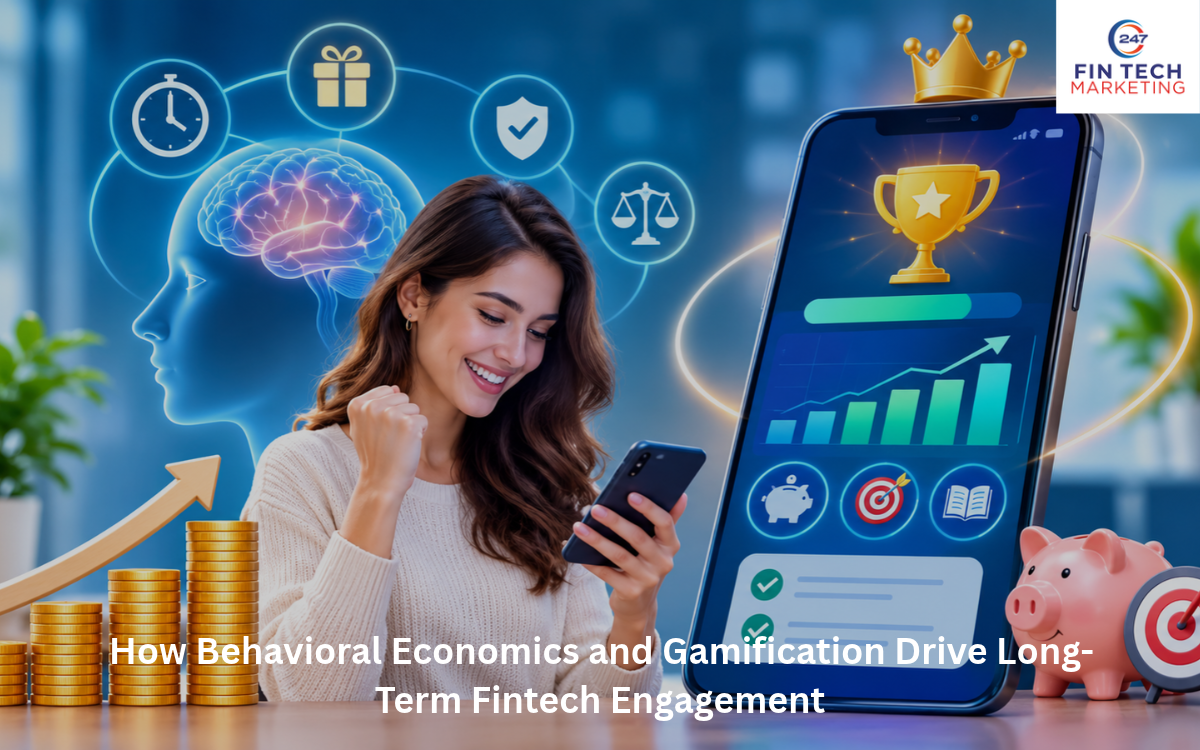
By combining behavioral economics, personalized experiences, and purposeful gamification, fintech companies can transform occasional app users into active, loyal customers.
Why Traditional Sign-Up Incentives Are Not Enough
Cashback offers, referral bonuses, and discounted transaction fees can encourage people to try a financial platform. However, these incentives rarely create meaningful customer relationships on their own.
The primary motivation behind a sign-up bonus is often external. Users register because they want the reward rather than because they recognize the long-term value of the product.
This creates a transactional relationship. When another platform offers better promotion, customers may have little reason to stay.
Behavioral psychology highlights a concept known as the over justification effect. When external rewards become the primary reason for performing an activity, they can sometimes weaken a person’s internal motivation.
For fintech platforms, the solution is to develop intrinsic motivation. Customers should feel encouraged to use the product because it helps them achieve meaningful financial outcomes, such as building savings, managing expenses, improving financial knowledge, or investing toward future goals.
The objective is to make the product valuable enough so that customers continue using it even after promotional incentives disappear.
Four Behavioral Economics Principles That Improve Fintech Engagement
Behavioral economics explores how psychological factors influence everyday decisions, including financial choices. Understanding these patterns helps fintech businesses create digital experiences that make positive financial behavior easier.
1. Present Bias: Make Financial Progress Feel Immediate
People naturally prioritize immediate satisfaction over benefits that may take years to achieve. For example, saving for retirement can feel less rewarding than purchasing something today.
Fintech applications can address this challenge by making long-term financial activities simple and immediately rewarding.
Consider automated savings features that round up everyday purchases and transfer the difference into a savings account. Instead of asking customers to make repeated decisions, the platform helps them save consistently with minimal effort.
Other useful features include:
- Automated recurring deposits.
- Small, achievable savings targets.
- Instant notifications after successful transactions.
- Visual updates showing financial progress.
These features reduce friction and help customers experience the benefits of responsible financial habits sooner.
2. The Endowment Effect: Encourage Personal Ownership
The endowment effect describes how people tend to value something more when they feel a sense of ownership over it.
Fintech platforms can use this principle by allowing customers to personalize their financial experience.
For example, users might create customized savings categories, organize spending dashboards, establish investment goals, or configure personalized financial alerts.
As customers invest time and effort into building their financial environment, the platform becomes more relevant to their everyday routines.
Personalization should serve a practical purpose rather than simply encouraging users to spend more time inside the application.
3. Loss Aversion: Highlight the Value of Consistency
People often experience the possibility of losing something more strongly than the satisfaction of gaining something equivalent.
Fintech businesses can apply this principle by showing customers the progress they have already achieved.
For example, a savings application could highlight a customer’s consecutive weekly contributions, completed milestones, or progress toward an emergency fund.
Reminders can encourage users to maintain positive habits without creating unnecessary anxiety.
The important distinction is that loss aversion should support financial discipline, not pressure customers into transactions or risky investment decisions.
4. Choice Overload: Simplify Financial Decisions
Financial products can involve complicated decisions. Customers may need to compare investment options, understand different account types, or select suitable budgeting features.
Presenting too many choices at once can create confusion and discourage action.
Fintech platforms can improve their experience by organizing information into simple categories, providing clear comparisons, and offering guided recommendations based on customer preferences.
For example, an investment platform could help users explore options based on their financial goals, experience, and risk tolerance.
Simplifying the decision-making process builds confidence and makes digital financial services more accessible.
Purposeful Gamification: Making Financial Habits More Engaging
Gamification is often misunderstood as adding points, badges, animations, or rewards to an application. While these elements can make digital experiences entertaining, they do not automatically create meaningful engagement.
In financial technology, gamification should encourage useful customer behavior rather than simply increase screen time.
A successful Fintech Content Marketing strategy can also support this process by explaining financial features, introducing interactive learning experiences, and helping customers understand the benefits of consistent financial habits.
Here are three practical gamification techniques that fintech businesses can implement.
1. Visual Progress Tracking
Visual progress indicators make financial goals easier to understand.
Instead of displaying only account balances, applications can introduce progress bars, savings rings, and milestone trackers.
For example, a customer saving for a house deposit could see how much of their target has been achieved and what remains.
These visual elements provide a clear sense of progress and encourage users to continue working toward their objectives.
2. Streaks and Habit-Building Features
Streaks encourage consistency by recognizing repeated positive actions.
A budgeting application could track weekly budget reviews, while a savings platform might recognize consecutive weeks of successful contributions.
The purpose is not to encourage unnecessary daily app visits. Instead, streaks should reinforce behaviors that genuinely benefit the customer’s financial well-being.
Flexible reminders and recovery options can also prevent users from feeling discouraged when they miss a target.
3. Interactive Financial Education
Financial literacy is an important part of long-term customer engagement.
Fintech applications can introduce short educational modules, interactive quizzes, budgeting challenges, and personalized learning paths.
For example, users could complete a short lesson about compound interest before exploring investment-related features.
This approach combines education with product discovery, helping customers make more informed financial decisions while becoming familiar with the platform.
Understanding the Fintech Engagement Loop
An effective engagement strategy connects customer motivation with simple actions and meaningful feedback.
A typical engagement loop includes four stages:
1. Trigger: Introduce a relevant reminder or prompt encouraging users to work toward a financial goal.
2. Action: Make the desired activity simple, such as transferring money into a savings account.
3. Reward: Provide immediate feedback through a progress update, milestone notification, or achievement recognition.
4. Investment: Save the customer’s preferences, update their progress, and encourage the next meaningful interaction.
When implemented thoughtfully, this cycle can turn individual actions into repeatable financial habits.
How to Build a Sustainable Fintech Customer Retention Strategy
Behavioral principles and gamification deliver better results when they are supported by a clear customer engagement framework.
Step 1: Identify the Product’s Aha Moment
Every financial application has specific actions that indicate a customer is beginning to experience its value.
For one platform, this might be linking a bank account. For another, it could involve completing the first investment, setting up an automated transfer, or creating a personalized budget.
Identify which actions correlate with long-term engagement and design onboarding experiences that help customers reach these milestones quickly.
Step 2: Personalize Customer Experiences
Different customers have different financial priorities.
A young professional managing their first salary may need budgeting tools, while an experienced investor may be more interested in portfolio insights and advanced analytics.
Segment users according to relevant preferences, financial goals, product usage, and lifecycle stages.
Use these insights to deliver relevant in-app messages, educational resources, and notifications instead of sending identical communications to everyone.
Step 3: Build Meaningful Feedback Loops
Customers should understand how their actions contribute to financial progress.
Celebrate meaningful achievements, such as reaching a savings target, reducing outstanding debt, or consistently following a budget.
Personalized progress summaries, helpful recommendations, and milestone notifications can reinforce positive experiences and strengthen customer relationships.
Measuring Long-Term Fintech Engagement
Moving beyond acquisition-focused marketing requires businesses to measure more than downloads and registrations.
The following metrics provide a clearer understanding of customer engagement and retention.
- 30-Day and 90-Day Retention Rates: Measure how many customers continue using the application after their initial registration.
- DAU/MAU Ratio: Compares daily active users with monthly active users to understand how frequently customers interact with the platform.
- Feature Adoption Rate: Tracks how customers discover and use important features such as automated savings, budgeting tools, and investment dashboards.
- Customer Lifetime Value (LTV): Estimates the long-term value generated by a customer relationship.
- Churn Rate: Measures the percentage of customers who stop using the platform during a specific period.
- Engagement Conversion Rate: Tracks how educational content, product prompts, and personalized campaigns encourage meaningful actions.
Analyzing these indicators together helps fintech businesses identify engagement gaps, improve customer experiences, and make more informed marketing decisions.
Turning Customer Engagement into Sustainable Fintech Growth
Long-term fintech growth cannot depend entirely on promotional campaigns and attractive sign-up incentives. While these tactics can generate initial interest, sustainable success comes from delivering consistent value throughout the customer journey.
Behavioral economics helps financial platforms understand why customers make certain decisions, while gamification makes positive financial habits easier to maintain. When supported by thoughtful UX design, personalization, educational resources, and relevant communication, these strategies can create stronger customer relationships.
Building this type of ecosystem requires coordination between product development, customer experience, and marketing. Comprehensive Fintech Marketing Services can help businesses connect these elements through data-driven acquisition, personalized communication, customer lifecycle campaigns, and retention-focused strategies.
Ultimately, the most successful fintech platforms will not simply compete for app downloads. They will earn a place in customers’ everyday financial lives by making money management more accessible, understandable, and rewarding.