


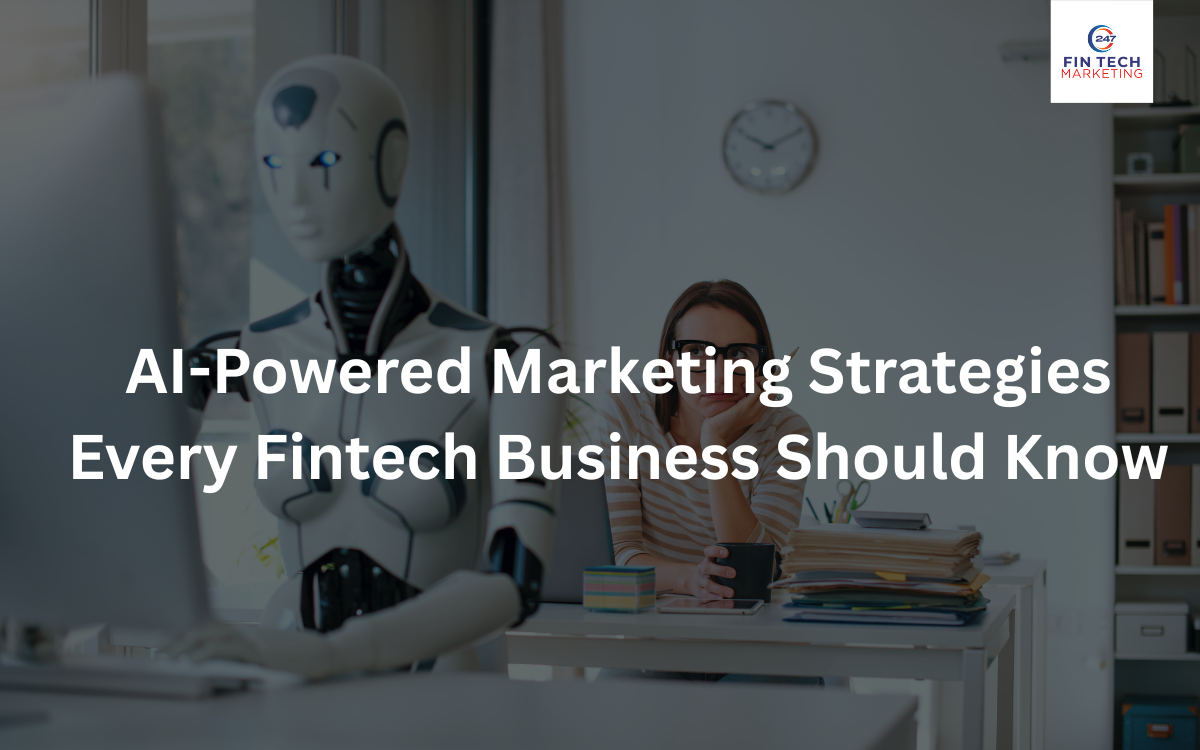
The fintech industry has transformed how people manage money, invest, borrow, and make payments. As competition continues to grow in 2026, simply offering innovative financial products is no longer enough. Fintech companies must also deliver highly personalized, secure, and seamless customer experiences while navigating strict regulatory requirements.
This is where AI fintech marketing has become a gamechanger. Artificial intelligence enables fintech businesses to understand customer behavior, automate repetitive marketing tasks, optimize campaigns, and deliver personalized experiences on a scale. From predictive analytics and customer segmentation to AI-powered content creation and marketing automation, AI is helping financial businesses improve customer acquisition while reducing marketing costs. When combined with professional Fintech SEO Services, AI also helps businesses improve organic search visibility, attract high-intent prospects, and create content that aligns with both search engine algorithms and evolving AI-powered search experiences.
In this guide, we’ll explore the top AI-driven marketing practices that fintech businesses should adopt in 2026 to stay competitive and drive sustainable growth.
Why Fintech Marketing Requires a Different Approach
Unlike traditional eCommerce or retail businesses, fintech companies operate in a highly regulated and trust-sensitive environment. Marketing financial products requires balancing innovation with transparency and compliance.
Building Customer Trust
Financial decisions involve sensitive personal information and significant financial commitments. Customers expect secure platforms, transparent communication, and reliable service. AI can support trust-building by delivering personalized yet consistent customer experiences without compromising security.
Regulatory Compliance
Financial marketing must comply with regulations regarding data privacy, advertising, and consumer protection. AI can assist by monitoring marketing content, identifying compliance risks, and helping teams maintain consistent messaging.
Longer Customer Decision Cycles
Whether applying for a mortgage, purchasing insurance, or selecting an investment platform, customers often spend weeks researching before planning. AI helps nurture prospects through personalized content and timely follow-ups during these longer buying journeys.
Complex Financial Products
Many fintech offerings require education before customers are ready to convert. AI-powered content recommendations ensure users receive relevant educational resources based on their interests and stage in the buying journey.
High Customer Lifetime Value
Acquiring a fintech customer can be expensive, making retention equally important. AI enables businesses to identify upselling opportunities, predict churn, and strengthen long-term customer relationships.
How AI is Transforming Fintech Marketing
Artificial intelligence is reshaping every stage of the marketing funnel.
Predictive Analytics
Predictive analytics in fintech use historical customer data to forecast future behavior. Businesses can identify customers most likely to convert, detect cross-selling opportunities, and optimize campaign timing. For example, a digital lending platform can predict which users are likely to apply for a loan based on browsing behavior and previous financial activity.
AI-Driven Customer Segmentation
Traditional segmentation relies on demographics such as age or location. AI analyzes behavioral patterns, transaction history, product usage, and engagement to create dynamic customer segments. This allows marketers to target customers more accurately with relevant offers and messaging.
Hyper-Personalization
Modern customers expect personalized experiences. Fintech personalization powered by AI enables companies to recommend financial products, educational content, and promotions based on individual preferences and behaviors. A wealth management platform, for instance, can recommend investment portfolios tailored to a user’s financial goals and risk tolerance.
Behavioral Targeting
AI continuously analyzes customer interactions across websites, mobile apps, emails, and social media. This enables marketers to deliver relevant content at the right moment, improving engagement and conversion rates.
AI-Powered Marketing Automation
AI-powered marketing automation simplifies repetitive marketing tasks such as email campaigns, customer onboarding, lead nurturing, and follow-up communications. Automation ensures customers receive timely and relevant information without requiring constant manual effort.
Top AI Marketing Practices for Fintech Companies
1. AI-Driven Audience Segmentation
One-size-fits-all marketing is no longer effective. AI identifies customer groups based on financial behavior, purchasing intent, spending habits, and engagement history. For example, a payments platform may create separate campaigns for freelancers, small businesses, and enterprise customers based on their transaction patterns.
2. Predictive Lead Scoring
Not every lead has the same likelihood of becoming a customer. AI evaluates multiple data points including website visits, email engagement, product interactions, and demographic information to assign lead scores. Sales teams can then focus on high-intent prospects, increasing conversion rates while reducing acquisition costs.
3. Personalized Email Marketing
Email remains one of the highest-performing digital marketing channels. AI marketing for fintech improves email performance by optimizing subject lines, send times, content recommendations, and customer segmentation. Instead of sending identical newsletters to everyone, AI ensures each subscriber receives content aligned with their financial interests.
4. Dynamic Website Personalization
AI enables websites to adapt in real time based on visitor behavior.
Examples include:
- Personalized product recommendations
- Customized landing pages
- Dynamic calls-to-action
- Location-based offers
- Relevant educational content
These experiences improve customer engagement and increase conversion rates.
5. AI-Powered SEO
Search engine optimization continues to evolve alongside AI-driven search experiences.
Modern AI-powered SEO includes:
- Search intent analysis
- Keyword clustering
- Content optimization
- Internal linking recommendations
- Content gap analysis
Publishing helpful, trustworthy, and well-structured content helps fintech businesses improve visibility in both traditional search engines and AI-powered search platforms.
6. Paid Advertising Optimization
AI continuously monitors advertising performance and adjusts campaigns automatically.
It helps optimize:
- Budget allocation
- Bid strategies
- Audience targeting
- Creative testing
- Conversion optimization
This results in better return on ad spending and improved campaign efficiency.
7. AI-Generated Content
Content marketing remains essential for educating customers about financial products.
AI assists marketing teams by generating:
- Blog outlines
- Social media posts
- Email drafts
- Product descriptions
- Landing page copy
- Frequently asked questions
Human editors should always review AI-generated content to ensure accuracy, compliance, and brand consistency.
8. Marketing Automation Workflows
Automation helps fintech businesses maintain consistent customer communication throughout the customer lifecycle.
Common automated workflows include:
- Customer onboarding
- Lead nurturing
- Product education
- Loan application reminders
- Renewal notifications
- Cross-selling campaigns
These workflows improve customer experience while reducing manual workload.
9. Customer Retention Using AI
Retaining existing customers is often more cost-effective than acquiring new ones.
AI helps identify opportunities for:
- Personalized product recommendations
- Loyalty campaigns
- Financial education
- Customer satisfaction monitoring
- Upselling and cross-selling
Strong retention strategies contribute directly to long-term profitability.
10. Churn Prediction
AI models analyze customer engagement, transaction frequency, and behavioral changes to identify users at risk of leaving. Businesses can proactively launch retention campaigns before customers disengage completely, improving long-term customer loyalty.
Best AI Tools for Fintech Marketing
Selecting the right technology stack is essential for successful AI implementation.
CRM
- Salesforce Einstein
- HubSpot AI
- Microsoft Dynamics 365
Analytics
- Google Analytics 4
- Mixpanel
- Amplitude
Email Marketing
- ActiveCampaign
- Customer.io
- Klaviyo
Chatbots
- Intercom
- Zendesk AI
- Drift
Content Creation
- ChatGPT
- Jasper
- Copy.ai
SEO
- Semrush
- Ahrefs
- Surfer SEO
These AI marketing tools help fintech businesses automate workflows, analyze customer behavior, and improve marketing performance.
Common Challenges of AI in Fintech Marketing
Despite its benefits, AI adoption comes with important considerations.
Data Privacy
Financial institutions handle sensitive customer information. Strong security measures and compliance with privacy regulations are essential.
Regulatory Compliance
Marketing content generated using AI should always be reviewed to ensure it complies with applicable financial regulations.
AI Bias
Poor-quality training data can produce biased recommendations or customer segmentation. Regular audits help minimize these risks.
Hallucinations
Generative AI may occasionally produce inaccurate or misleading financial information. Human review remains essential before publishing any customer-facing content.
System Integration
Many fintech companies use multiple marketing platforms and legacy systems. Successful AI implementation requires seamless integration across CRM, analytics, automation, and customer data platforms.
AI Marketing Best Practices
To maximize success with AI, fintech businesses should follow these best practices:
- Keep human experts involved in strategic decision-making.
- Regularly review AI-generated content and recommendations.
- Continuously test and optimize campaigns using performance data.
- Protect customer data with robust security and governance policies.
- Align AI initiatives with measurable business goals such as customer acquisition, retention, and lifetime value.
- Focus on delivering value and trust rather than relying solely on automation.
The Future of AI in Fintech Marketing
The next generation of AI will further transform fintech marketing through:
- Agentic AI capable of managing entire marketing workflows.
- Voice AI for conversational banking experiences.
- Predictive customer journeys that anticipate customer needs before they arise.
- Autonomous campaign management with real-time optimization.
- Generative search optimization for AI-powered search engines.
- AI-powered compliance monitoring to identify regulatory issues before campaigns go live.
Businesses that invest strategically in these technologies will be better positioned to compete in the rapidly evolving financial services landscape.
Conclusion
Artificial intelligence has become a fundamental part of modern fintech digital marketing. From predictive analytics and personalized customer experiences to intelligent automation and SEO optimization, AI enables fintech businesses to market more efficiently while delivering greater value to customers. A strong digital presence supported by a specialized Fintech Web Design Agency further enhances these efforts by ensuring that websites are not only visually compelling but also optimized for conversion, user experience, and trust key factors in driving customer acquisition and engagement in the fintech industry.
However, successful implementation requires more than automation alone. Organizations should combine AI with human expertise, maintain strict compliance standards, protect customer data, and continuously optimize marketing strategies based on measurable outcomes.
As AI technologies continue to evolve, fintech companies that adopt a thoughtful, customer-first approach will be better equipped to drive sustainable growth, improve customer acquisition, and build lasting trust in an increasingly competitive financial landscape. Partnering with an experienced Fintech Marketing Agency can further accelerate these efforts by combining AI-driven insights with industry expertise, ensuring marketing strategies remain compliant, personalized, and aligned with business goals. By leveraging the right mix of technology and human expertise, fintech businesses can build stronger customer relationships and achieve long-term success.

Author
Mitesh Patel
Mitesh Patel is the co-founder of 247 FinTech Marketing, LawFirm Marketing and a columnist. He helps companies like Emerson and other top Fortune 500 compnies to grow their revenue.