



The fintech industry is evolving rapidly, bringing new opportunities for digital banking, online payments, lending platforms, and financial services. However, as financial technology becomes more advanced, the risks associated with digital fraud are also increasing. Artificial intelligence is making financial services smarter, but it is also giving cybercriminals new ways to manipulate identities, steal information, and exploit digital systems.
For businesses working with a Fintech Marketing Agency, this changing environment creates an important consideration: customer acquisition and business growth must go hand in hand with digital security and customer trust. Financial customers expect convenient services, but they also want confidence that their personal and financial information is protected.
In 2026, traditional fraud prevention methods alone are no longer enough. Fintech companies need smarter approaches that combine artificial intelligence, identity intelligence, behavioral analysis, and continuous monitoring. Understanding these technologies can help financial businesses build safer platforms and stronger customer relationships.
1. Why AI-Driven Financial Fraud Is Becoming More Sophisticated
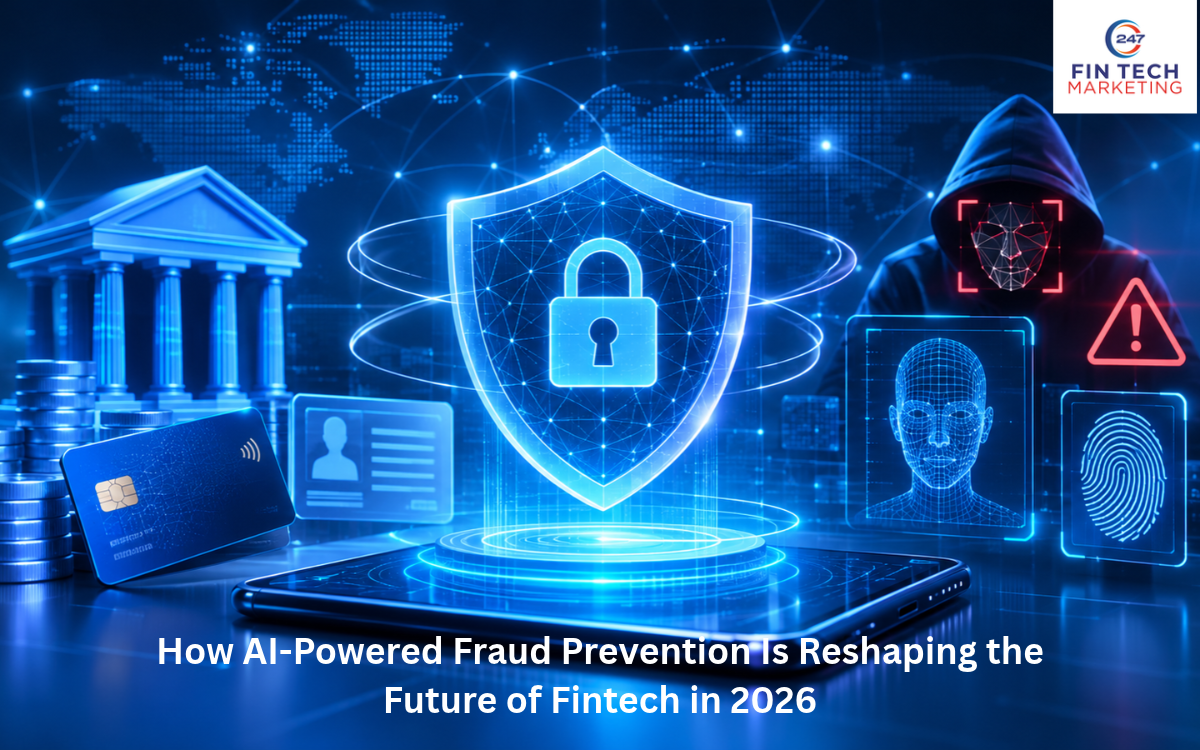
Artificial intelligence has made it easier for fraudsters to create convincing digital identities and automate attacks. Previously, many fraudulent activities required significant technical knowledge and manual effort. Today, accessible AI tools can help criminals produce realistic fake documents, imitate voices, generate deepfake videos, and create personalized phishing messages.
Some of the most significant threats include:
- Synthetic identity fraud: Criminals combine genuine and fabricated personal information to create identities that appear legitimate.
- Deepfake attacks: AI-generated faces, videos, and voices can imitate real customers or authorized employees.
- Automated phishing: Fraudsters create convincing emails and messages designed to steal login credentials and financial information.
- Account takeover: Stolen credentials and automated login attempts allow criminals to access genuine customer accounts.
These threats are particularly concerning for digital banks, payment providers, lending platforms, and financial applications because their services depend heavily on remote customer verification.
2. Why Traditional Fraud Detection Methods Need an Upgrade
Traditional security systems generally depend on identity documents, passwords, biometric checks, and predefined fraud detection rules. Although these methods remain important, sophisticated AI-generated attacks can sometimes bypass individual verification layers.
For example, a fraudulent applicant might submit an altered identity document alongside a convincing AI-generated facial image. If a platform relies on only one verification method, suspicious applications may go undetected.
There is also another challenge: false positives.
When fraud detection systems are too restrictive, genuine customers may experience unnecessary verification requests or rejected transactions. This creates frustration and can discourage people from completing account registrations.
Fintech companies need to find a balance between strong security and a smooth customer experience. A more intelligent approach evaluates multiple signals rather than relying on a single verification result.
3. OSINT Is Changing the Way Fintech Companies Verify Digital Identities
Open-Source Intelligence, commonly known as OSINT, is becoming an important part of modern digital risk assessment.
OSINT involves collecting and analyzing publicly available information to understand the credibility and consistency of a digital identity. Instead of checking only whether an identity document appears genuine, businesses can examine whether other available information supports the identity.
For example, fintech companies may evaluate:
- Email address history and reputation.
- Phone number consistency.
- Publicly available digital footprints.
- IP address and network reputation.
- Known data breach exposure.
- Suspicious or inconsistent identity information.
Consider a customer applying for a digital financial account. Their identity document may pass an initial verification check, but their email address could be newly created, their phone number may be disposable, and their network activity might show unusual characteristics.
Individually, these signals do not prove fraudulent activity. However, analyzing them together can help identify applications that require additional investigation.
OSINT should always be used responsibly, with appropriate privacy safeguards and compliance with applicable data protection requirements.
4. Combining Multiple Risk Signals for Better Fraud Detection
One of the most important developments in fintech security is the move towards layered risk assessment.
Rather than relying on a single security check, businesses can combine different types of information to develop a more complete picture of customer activity.
For example, an advanced fraud detection system might consider:
| Intelligence layer | What it evaluates |
| Identity intelligence | Whether customer information is consistent |
| Device intelligence | Device history and unusual device changes |
| Behavioral analysis | How users interact with digital platforms |
| Network intelligence | IP reputation and suspicious connections |
| Transaction monitoring | Unusual payment patterns and activity |
The real advantage comes from combining these signals.
A new device does not automatically mean an account has been compromised. However, when an unfamiliar device is combined with an unusual location, abnormal login behavior, and suspicious transactions, the system may identify a higher-risk situation.
This approach helps financial businesses make more informed decisions while reducing unnecessary friction for legitimate customers.
5. Continuous Fraud Monitoring Is Becoming Essential
Fraud prevention should not stop once a customer successfully creates an account. Criminals may target legitimate accounts weeks or months after registration, making continuous monitoring an important part of financial security.
Modern fintech platforms should monitor customer activity across different stages:
- Onboarding: Identify suspicious applications before accounts are approved.
- Login activity: Detect unusual devices, locations, and access patterns.
- Financial transactions: Flag unexpected payment behavior and unusual transaction amounts.
- Account changes: Review suspicious updates to contact details, passwords, or banking information.
- Ongoing activity: Identify unusual patterns that may indicate account takeover.
Behavioral biometrics can make this process more effective by analyzing how customers interact with their devices, including typing patterns, mouse movements, and touchscreen behavior.
The focus is shifting from checking identity at one moment to understanding activity throughout the customer journey. Recent industry research also highlights the growing importance of real-time behavioral signals and cross-channel fraud detection.
Thomson Reuters Institute+1
6. Practical Strategies Fintech Companies Can Use to Reduce Fraud
Adopting advanced technology is important, but successful fraud prevention also requires a clear implementation strategy. Fintech businesses should focus on solutions that address their actual security challenges.
Here are five practical steps:
1. Strengthen identity verification
Combine document verification, biometric checks, and digital identity intelligence instead of depending on a single authentication method.
2. Introduce AI-powered risk scoring
Use machine learning to evaluate multiple signals and identify potentially suspicious applications or transactions. Regularly test the system to understand its accuracy.
3. Monitor unusual customer behavior
Establish normal activity patterns and investigate significant deviations, especially during account access and financial transactions.
4. Reduce unnecessary verification friction
Apply additional security checks when risk levels justify them. Genuine customers should not face excessive obstacles during everyday banking activities.
5. Review security performance regularly
Track fraud detection rates, false-positive rates, investigation times, customer complaints, and financial losses. These measurements help businesses understand whether their security investments are delivering results.
For fintech businesses investing in digital growth, working with a Fintech SEO Agency can also help communicate security capabilities, compliance commitments, and customer protection initiatives through informative website content. Clear educational information helps potential customers understand the safeguards behind a financial product.
7. Building Customer Trust Through Digital Marketing and Education
Technology alone cannot build customer confidence. Financial businesses must also communicate how they protect users, manage sensitive information, and respond to emerging security threats.
This is where educational marketing becomes valuable.
Fintech companies can use content marketing, webinars, industry reports, and informative social media campaigns to explain complex security topics in simple language.
Effective Fintech Social Media Marketing can help businesses share cybersecurity updates, fraud awareness tips, product security improvements, and expert insights with their audiences.
For example, a digital payment provider could publish educational content explaining how customers can recognize suspicious payment requests or protect their accounts from phishing attacks.
Useful content ideas include:
- Short videos explaining common financial scams.
- Articles discussing AI-powered fraud prevention.
- Expert interviews about digital identity verification.
- Customer education campaigns about account security.
- Webinars covering emerging fintech cybersecurity challenges.
Consistent communication helps businesses demonstrate expertise, build credibility, and establish stronger relationships with customers.
8. The Future of AI-Powered Fraud Prevention in Fintech
The future of fintech security will depend on how effectively financial businesses combine artificial intelligence, identity intelligence, behavioral analytics, and human oversight.
Fraudsters will continue developing more sophisticated techniques, which means security systems must evolve alongside them. Businesses will increasingly need real-time monitoring, stronger identity verification, better data integration, and improved collaboration between financial institutions.
However, adopting more technology is not automatically the solution. Fintech companies must also consider data privacy, regulatory requirements, system accuracy, and the impact of security processes on genuine customers.
The most effective strategy will be one that prevents suspicious activity without making financial services unnecessarily complicated.
Conclusion
AI-powered fraud is changing the way financial services operate, creating new challenges as well as opportunities for innovation. Synthetic identities, deepfake attacks, automated phishing, and account takeovers demonstrate why traditional security methods need to evolve.
For fintech companies, the priority should be building a comprehensive fraud prevention strategy that combines identity verification, OSINT, behavioral intelligence, and continuous monitoring. Equally important is educating customers and communicating security measures transparently.
In 2026, successful fintech businesses will be those that treat security and customer experience as connected priorities. Strong fraud prevention does more than protect financial transactions; it helps establish credibility, strengthen customer relationships, and support sustainable business growth.
Ultimately, the future of fintech belongs to businesses that can make digital financial services both innovative and trustworthy.